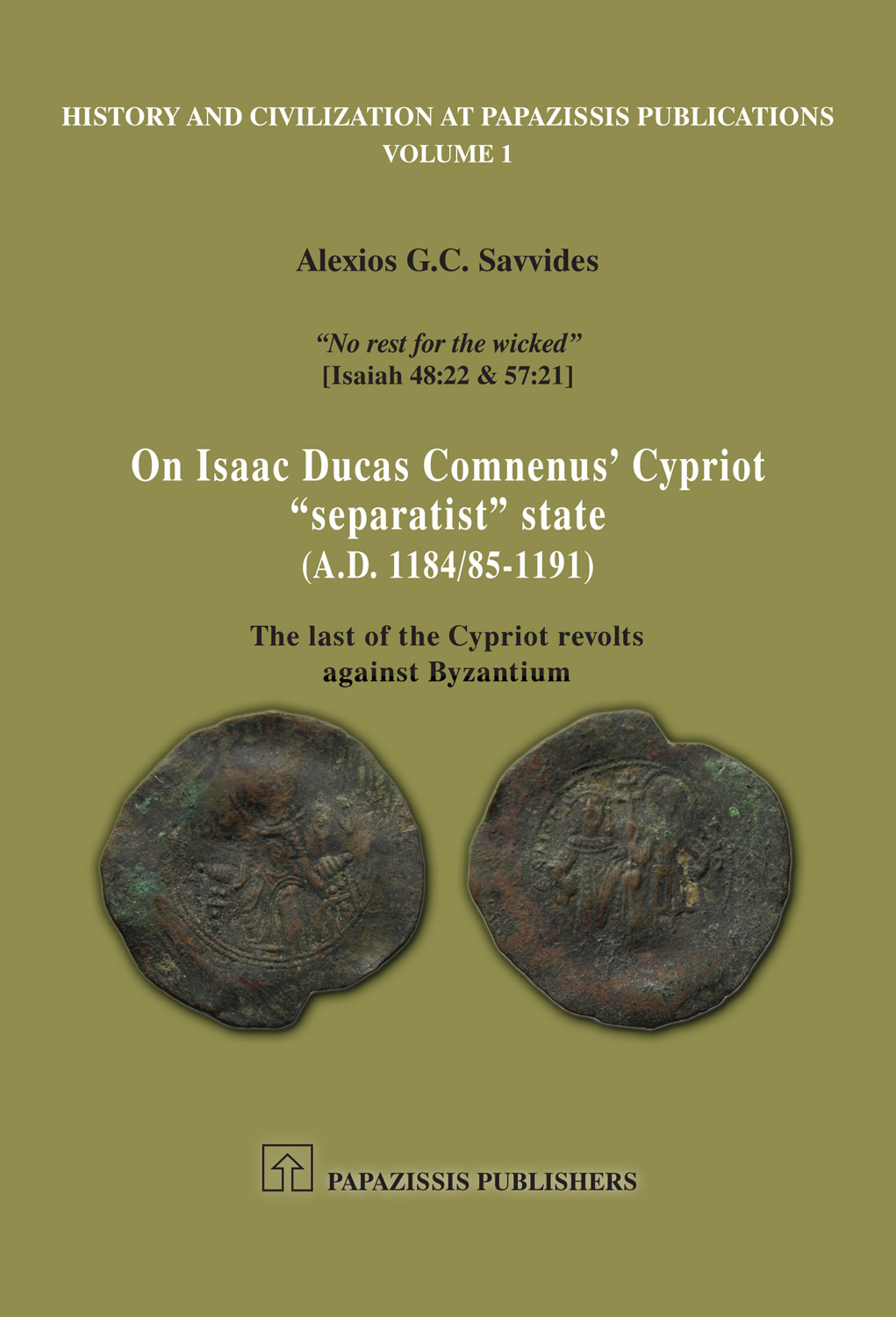
On Isaac Ducas Comnenus’ Cypriot “separatist” state (A.D. 1184/85-1191)
The last of the Cypriot revolts against Byzantium
| ISBN | 978-960-02-3539-5 |
|---|---|
| Σελίδες | 184 |
| Έτος πρώτης έκδοσης | 2019 |
| Έτος τρέχουσας έκδοσης | 2019 |
| Διαστάσεις | 14 × 21 cm |
8,48€
Aνήκει στις κατηγορίες:
- Ιστορία
- Κοινωνικές Επιστήμες
Aνήκει στη σειρά:
- History and Civilization
This monograph consists of a detailed examination of the career of the rebel ex-governor of Byzantine Cyprus, Isaac(ius) Ducas Comnenus, who succeeded in setting up an independent ‘Territorialstaat’ from the last Comnenus and the first Angelus emperors of Constantinople, between A.D. 1184/85 and 1191, ruling despotically with the title basileus, thwarting in collusion with the Normans of Sicily a menacing Constantinopolitan expedition against him (1186/87) and even minting his own coinage there. Following his defeat by a landing force of the knights of the Third Crusade (1191), he was forced to surrender his possessions and territories to the English crusader king Richard I Lionheart. His seven-year tumultuous regime, which was to earn him countless negative assessments from a variety of divergent contemporary and later primary sources (Greek, Latin and Oriental), was associated with the final period of Byzantine rule –albeit of a separatist nature– in Cyprus, which from A.D. 1191/92 onwards, havingbeen violently severed from the main body of the Byzantine Empire, was to play a significant part in the historical developments within the ‘Latinocracy’ period in the south-eastern Mediterranean.